GT Eesti

Family overview
- Text
- Ultra Light Italic
- Thin Italic
- Light Italic
- Book Italic
- Regular Italic
- Medium Italic
- Bold Italic
- Display
- Ultra Light Italic
- Thin Italic
- Light Italic
- Regular Italic
- Medium Italic
- Bold Italic
- Ultra Bold Italic
Subfamilies
- Text Ultra LightRapl on vallasisene linn Rapla vallas Rapla maakonnas ning ühtlasi selle maakonna halduskeskus. Linna läbib Vigala (Konuvere) jõgi.
- Text Ultra Light ItalicТаллин столица Эстонии, крупный пассажирский и грузовой морской порт.
- Text ThinПылва город на востоке Эстонии, административный центр уезда Пылвамаа. В городе расположена одноимённая железнодорожная станция.
- Text Thin ItalicРапла город без муниципального статуса в западной части Эстонии, административный центр уезда Рапламаа и волостной центр и составная часть волости Рапла.
- Text LightКохтла-Ярве город на северо-востоке Эстонии. Расположен на залежах горючего сланца, добыча и переработка которого являются основными видами деятельности в городе.
- Text Light ItalicTartu is the second largest city of Estonia, following Estonia’s political and financial capital Tallinn.
- Text BookPärnu on linn Eestis, Pärnu lahe edelarannikul Pärnu jõe suudmes, Pärnu maakonna halduskeskus. Vana-Pärnu sai linnaõigused 1251. aastal ja Pärnu 1318. aastal.
- Text Book ItalicValga on maakonnalinn Lõuna-Eestis Eesti-Läti piiril, Valga maakonna halduskeskus ja Eesti kõige lõunapoolsem linn. Linn moodustab ühtse terviku kaksiklinn Valkaga, mõlemat läbib Pedeli jõgi.
- Text RegularПярну портовый город на юго-западе Эстонии с населением 40 401 житель, является четвёртым по величине и по численности населения городом в Эстонии.
- Text Regular ItalicКивиыли город в северо-восточной части Эстонии в уезде Ида-Вирумаа. Является самостоятельным городским муниципалитетом и не входит в состав какой-либо волости.
- Text MediumViljandi on linn Lõuna-Eestis. Viljandi on Viljandi maakonna halduskeskus. Linn asub Sakala kõrgustikul, Viljandi järve kaldal. Viljandist on Tallinna 161 km, Tartusse 81 km ja Pärnusse 97 km, Riiga 245, Sankt Peterburgi 393, Helsingisse 247 ja Stockholmi 580 kilomeetrit.
- Text Medium ItalicПалдиски (эст. Paldiski), исторические названия Рогервик (швед. Rågervik), Балти́йский порт, Ба́лтиски (эст. Baltiski) — город в Эстонии, порт на берегу Финского залива.
- Text BoldЙыхви город на северо-востоке Эстонии, столица уезда Ида-Вирумаа. С 1918 по 1940 год имел статус города в Эстонской Республике, затем с 1940 по 1991 год в составе Эстонской ССР, в период с 1941 по 1944 год Йыхви находился в оккупации немецкими войсками.
- Text Bold ItalicПылва город на востоке Эстонии, административный центр уезда Пылвамаа. В городе расположена одноимённая железнодорожная станция.
- Settings
Typeface information
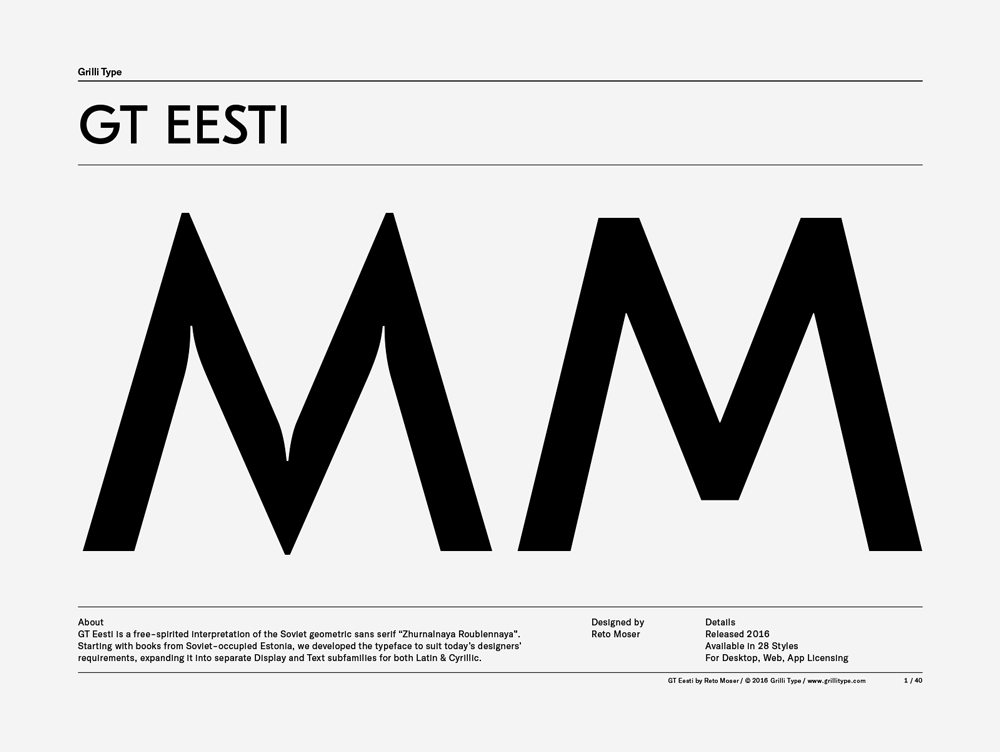
GT Eesti is a free-spirited interpretation of the Soviet geometric sans serif “Zhurnalnaya Roublennaya”. Starting with books from Soviet-occupied Estonia, we developed the typeface to suit today’s designers’ requirements, expanding it into separate Display and Text subfamilies for both Latin & Cyrillic.
- Designed by Reto Moser
- Released in 2016
- Available in 28 styles
- GT Eesti is available for customization and language extensions
- Download the free trial fonts
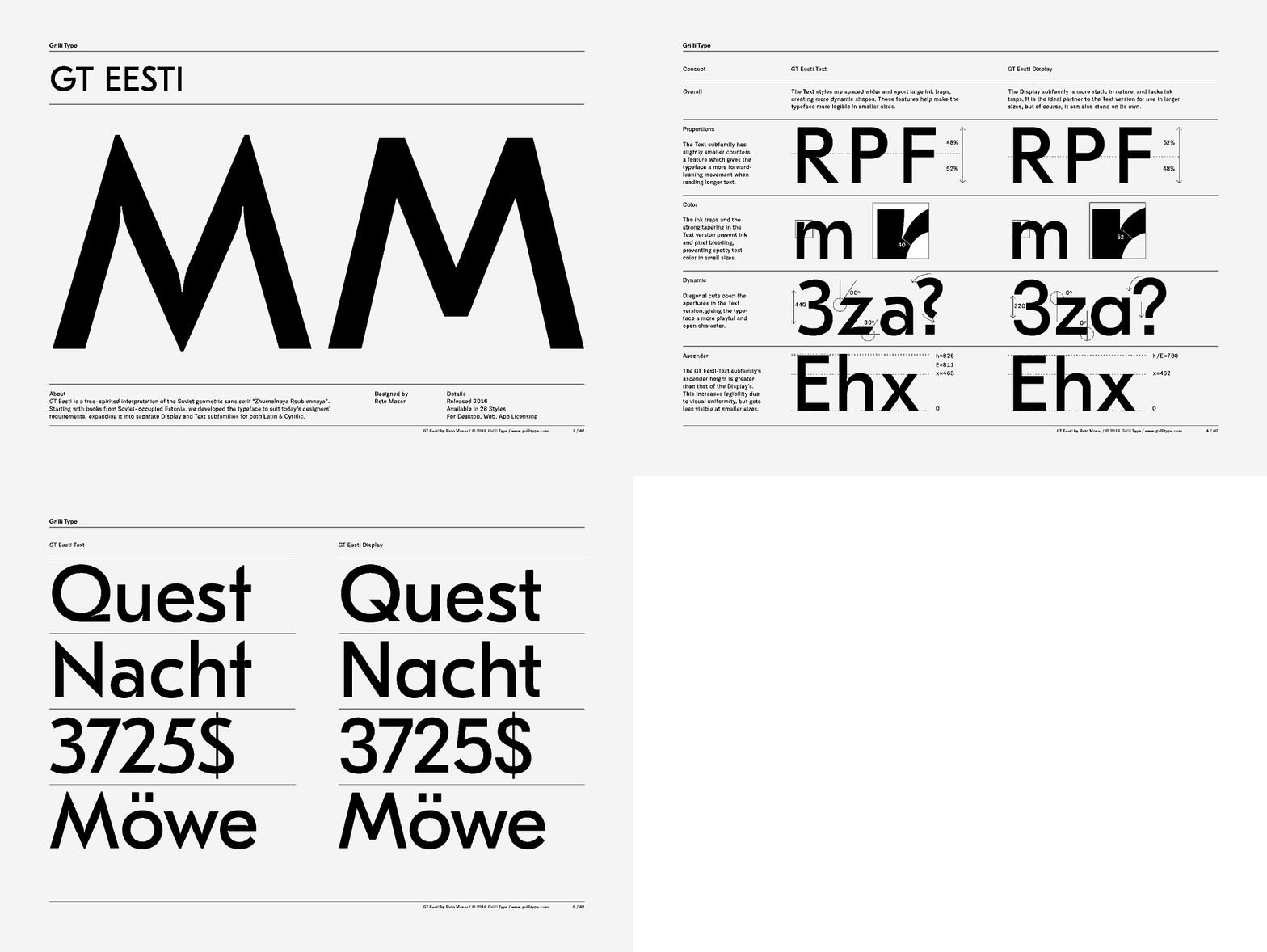
Typeface features
OpenType features enable smart typography. You can use these features in most Desktop applications, on the web, and in your mobile apps. Each typeface contains different features. Below are the most important features included in GT Eesti’s fonts:
- SS01
- Circular dots
Österreich?!
- SS02
- Compact accents
RÜCKWÄRTS
- SS03
- Historical “ß”
Weisestraße
- SS04
- Alternate “w” and “v”
- (Text version only)
Privatweg
Typeface Minisite
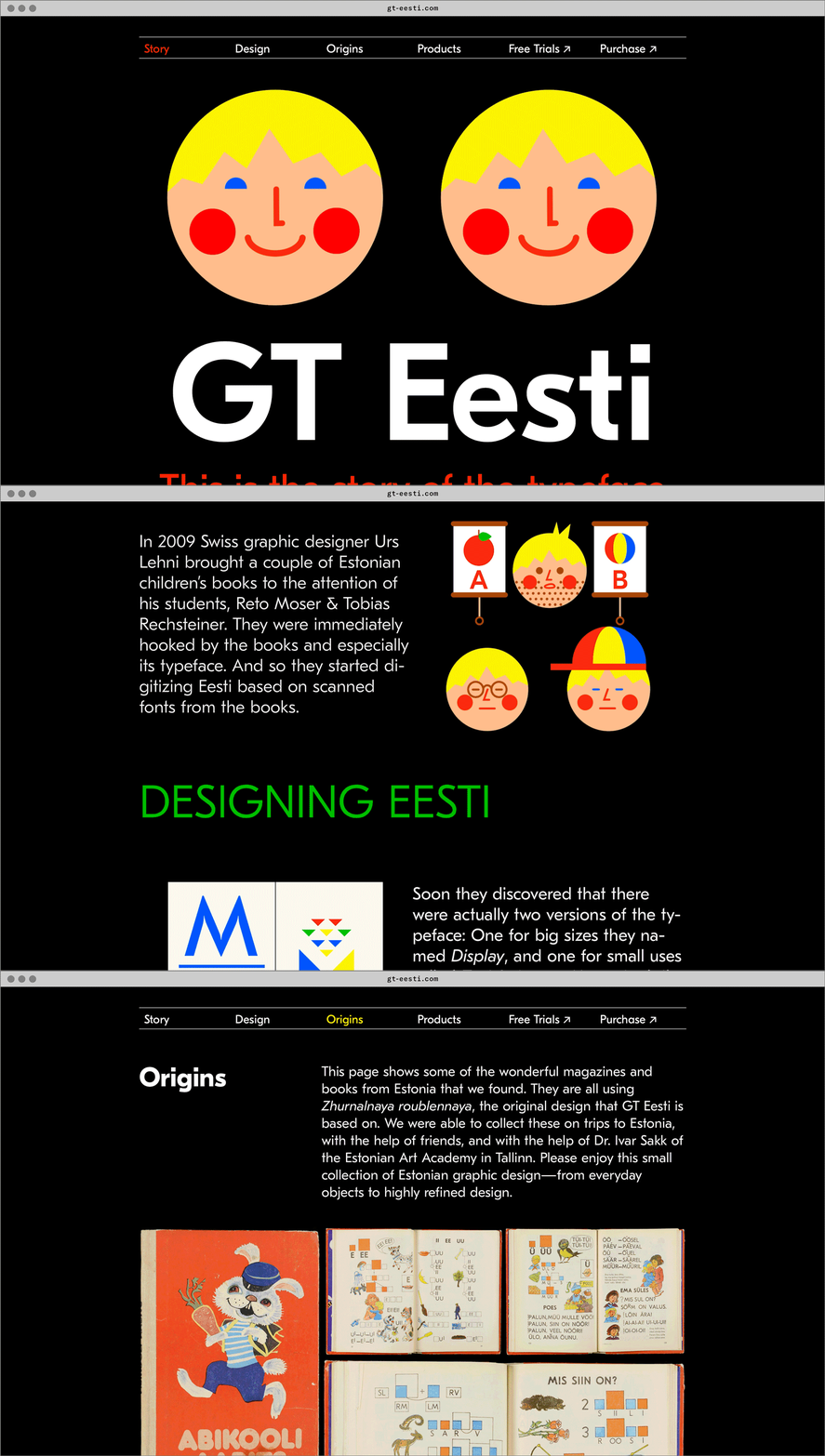
- Visit the GT Eesti minisite to discover more about the typeface family’s history and design concept.
GT Eesti in use