GT Mechanik

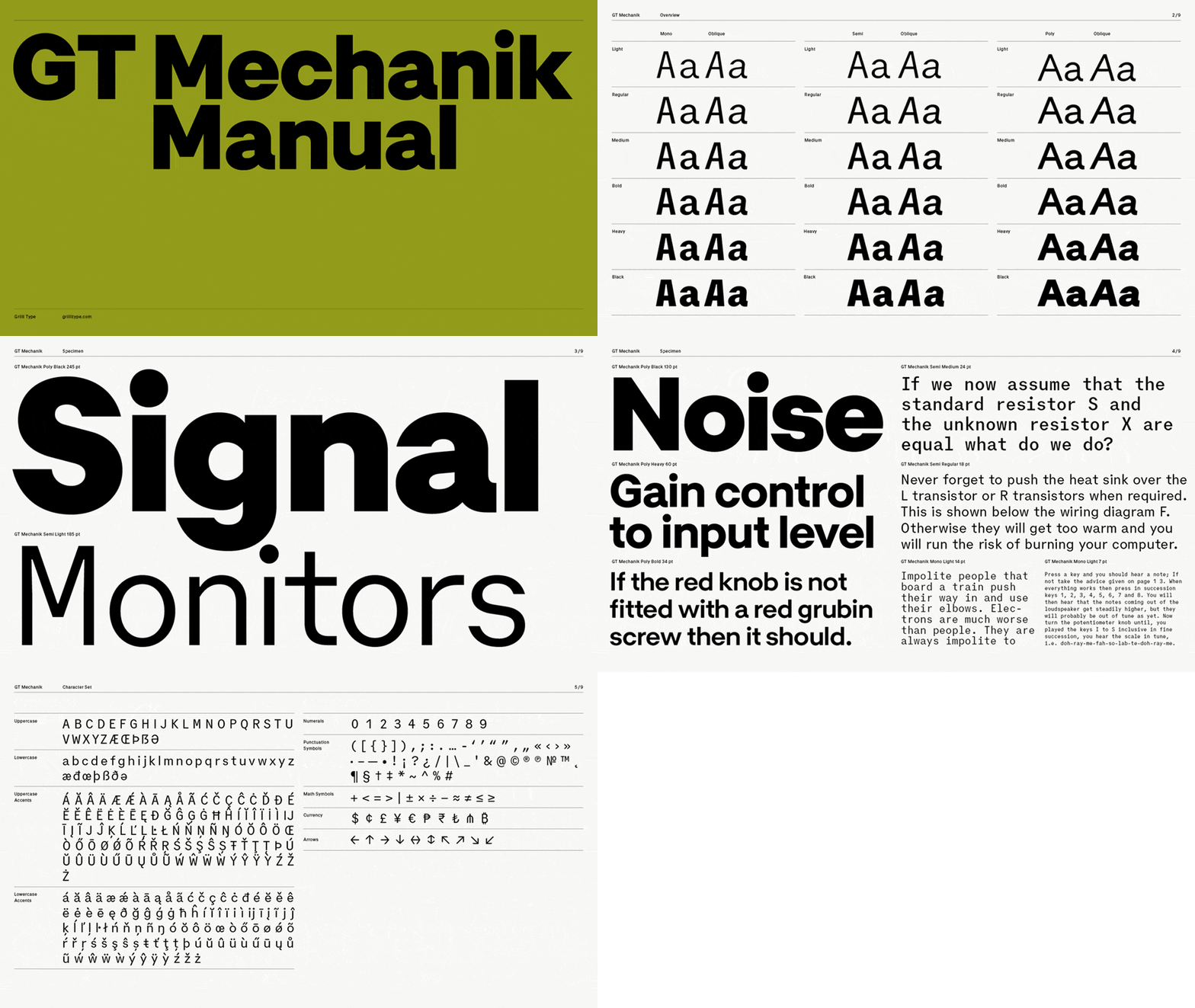
Family overview
- Mono
- Thin Oblique
- Light Oblique
- Regular Oblique
- Medium Oblique
- Bold Oblique
- Heavy Oblique
- Black Oblique
- Semi
- Thin Oblique
- Light Oblique
- Regular Oblique
- Medium Oblique
- Bold Oblique
- Heavy Oblique
- Black Oblique
- Poly
- Thin Oblique
- Light Oblique
- Regular Oblique
- Medium Oblique
- Bold Oblique
- Heavy Oblique
- Black Oblique
Subfamilies
- Semi ThinAn RST 5/9 report compresses reception quality into a standardized code, allowing variation in readability and strength to be communicated efficiently across operators using a shared framework of interpretation.
- Semi Thin ObliqueA BANDPASS filter isolates a defined range within a broader spectrum, excluding frequencies that fall outside its limits and shaping the resulting signal according to criteria of selection rather than completeness or total representation.
- Semi LightA circuit organizes movement into a closed path that both enables and constrains the flow of energy, distributing forces across a defined route in which every connection simultaneously allows passage and imposes limitation.
- Semi Light ObliqueMy carrier at 21.3 MHz provides a stable structure that supports variation without containing meaning itself, allowing information to be inscribed through modulation while remaining constant in form across transmission.
- Semi RegularSEMI configuration introduces partial separation within a system, allowing variation to exist without fully distributing across channels while maintaining a controlled degree of differentiation.
- Semi Regular ObliqueOur gain setting at +6 dB increases signal magnitude relative to a reference level, enhancing presence while maintaining proportional structure within the system.
- Semi MediumPhase alignment at 90° determines how signals interact when combined, producing reinforcement or cancellation depending on temporal offset, so timing becomes a defining structural parameter within the behavior of the system.
- Semi Medium ObliqueA reference point anchors variation within a system, making differences comparable by establishing a consistent baseline against which all deviation can be measured and understood.
- Semi BoldNoise consists of accumulated variation that resists stable interpretation within a system, remaining inseparable from the signal it surrounds and therefore requiring management and filtering rather than complete elimination.
- Semi Bold ObliqueEvery signal is both singular and repeatable, defined by variation within a shared structure that enables recognition across instances while preserving difference.
- Semi HeavyCalibration is the practice of aligning a system against a reference so that deviation becomes legible within a defined range, distributing variation into measurable increments that can be compared across time while maintaining a stable condition for interpretation.
- Semi Heavy ObliqueAt 50 Hz, repetition stabilizes into a perceptible rhythm that establishes a baseline against which variations can be measured, creating a shared temporal structure that organizes perception within the system.
- Semi BlackDrift describes gradual deviation over time as a system moves away from its calibrated state, often imperceptible until accumulated to a degree that requires correction or recalibration.
- Semi Black ObliqueSettings dial translates rotation into measurable value, converting physical movement into abstract adjustment that can be read, repeated, and communicated across different instances of the same system.
- Settings
Typeface information
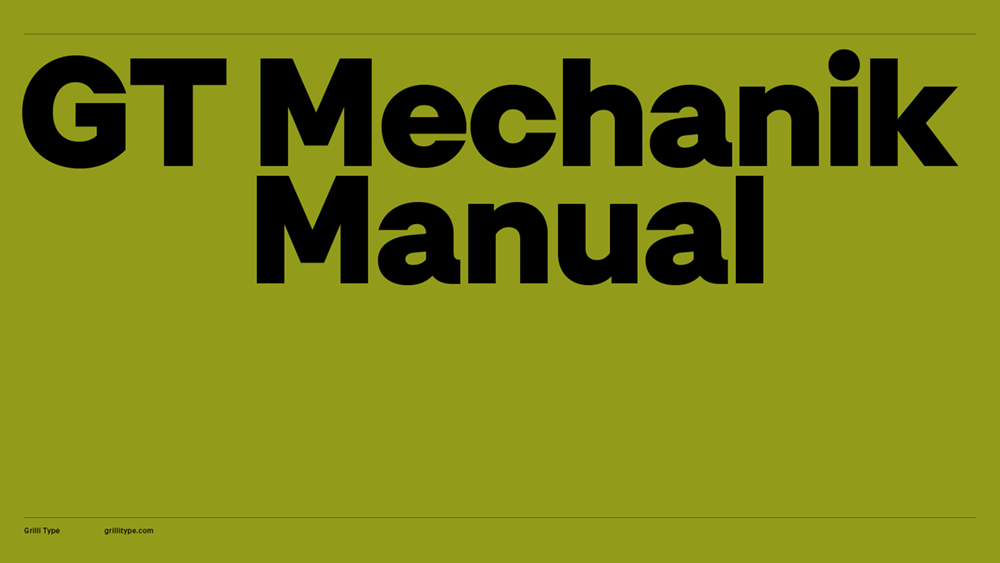
GT Mechanik dials in the appeal of electromechanical text systems by building an inevitable family around its monospace style. Idiosyncratic features that come with the restraints of mechanic typesetting become guiding principles along the tone axis. Mono, Text and Display, each follow that logic at a different scale and intensity.
- Designed by Shiva Nallaperumal, Reto Moser, Noël Leu
- Released in 2026
- Available in 42 styles
- GT Mechanik is available for customization and language extensions
- Download the free trial fonts
Typeface features
OpenType features enable smart typography. You can use these features in most Desktop applications, on the web, and in your mobile apps. Each typeface contains different features. Below are the most important features included in GT Mechanik’s fonts:
- TNUM
- Tabular figures
0123456789
Typeface Minisite
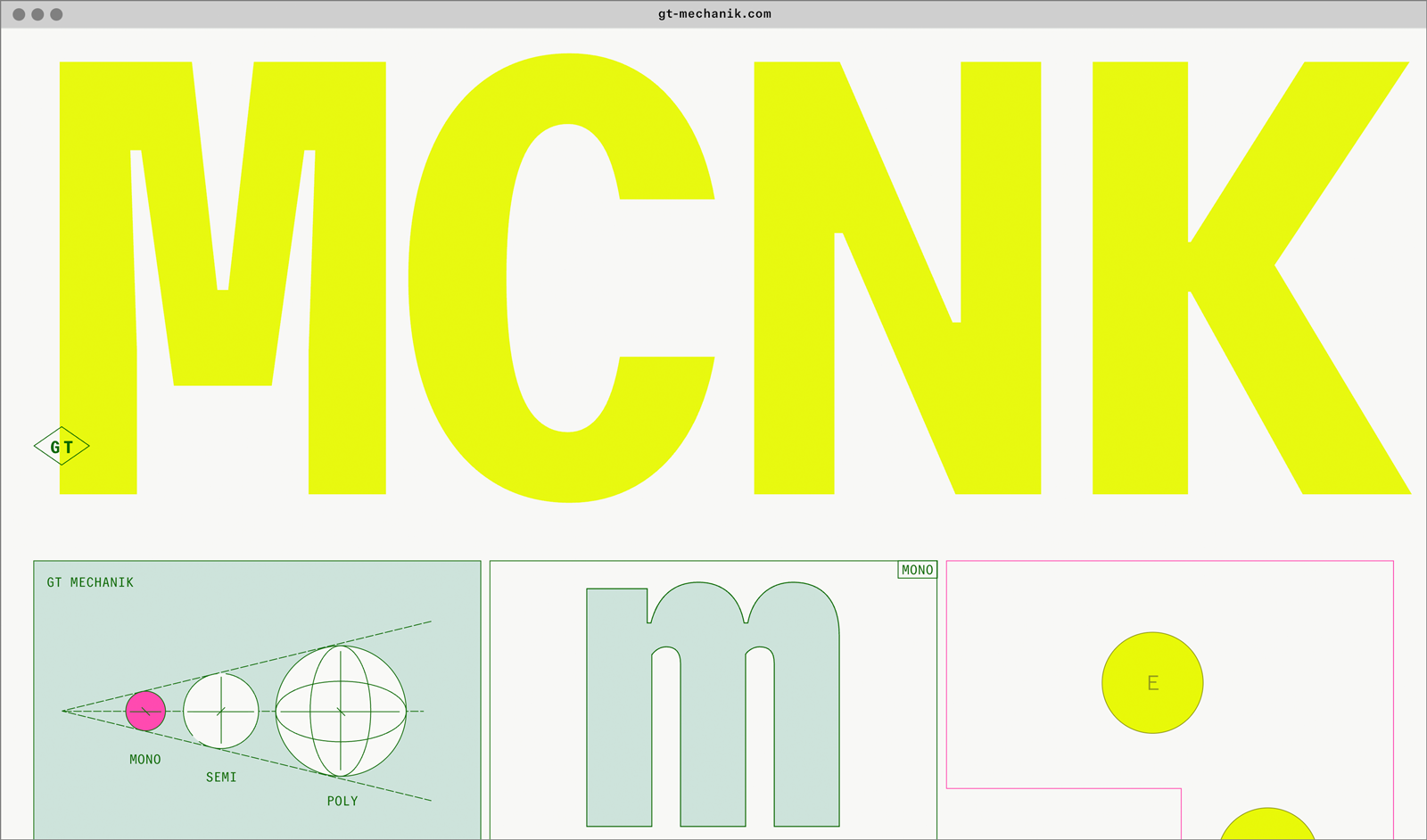
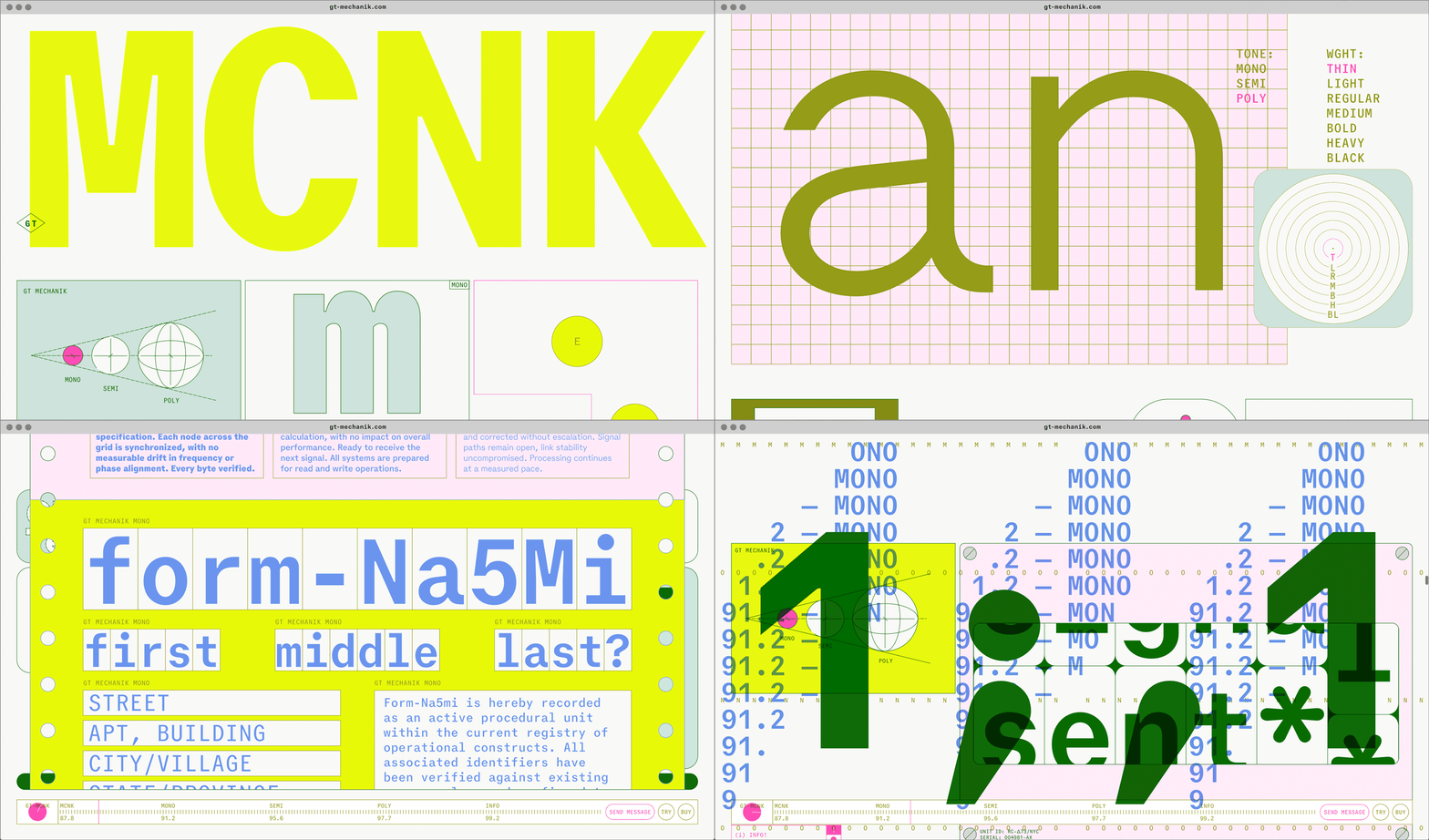
- Visit the GT Mechanik minisite to discover more about the typeface family’s history and design concept.